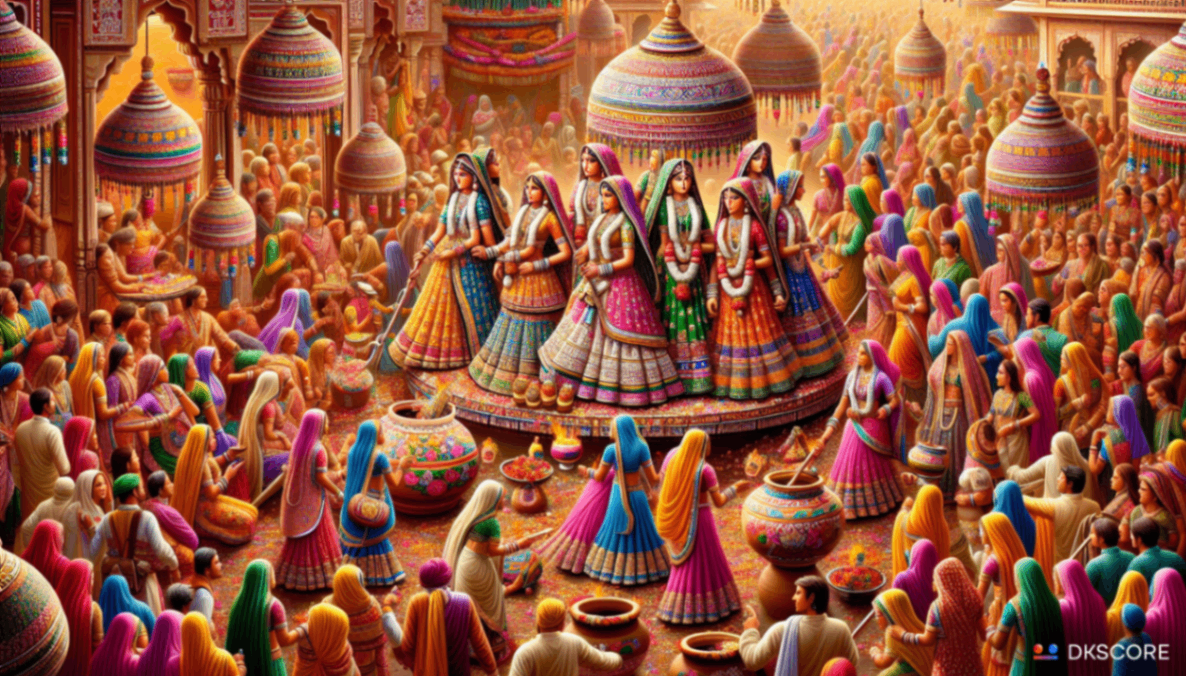
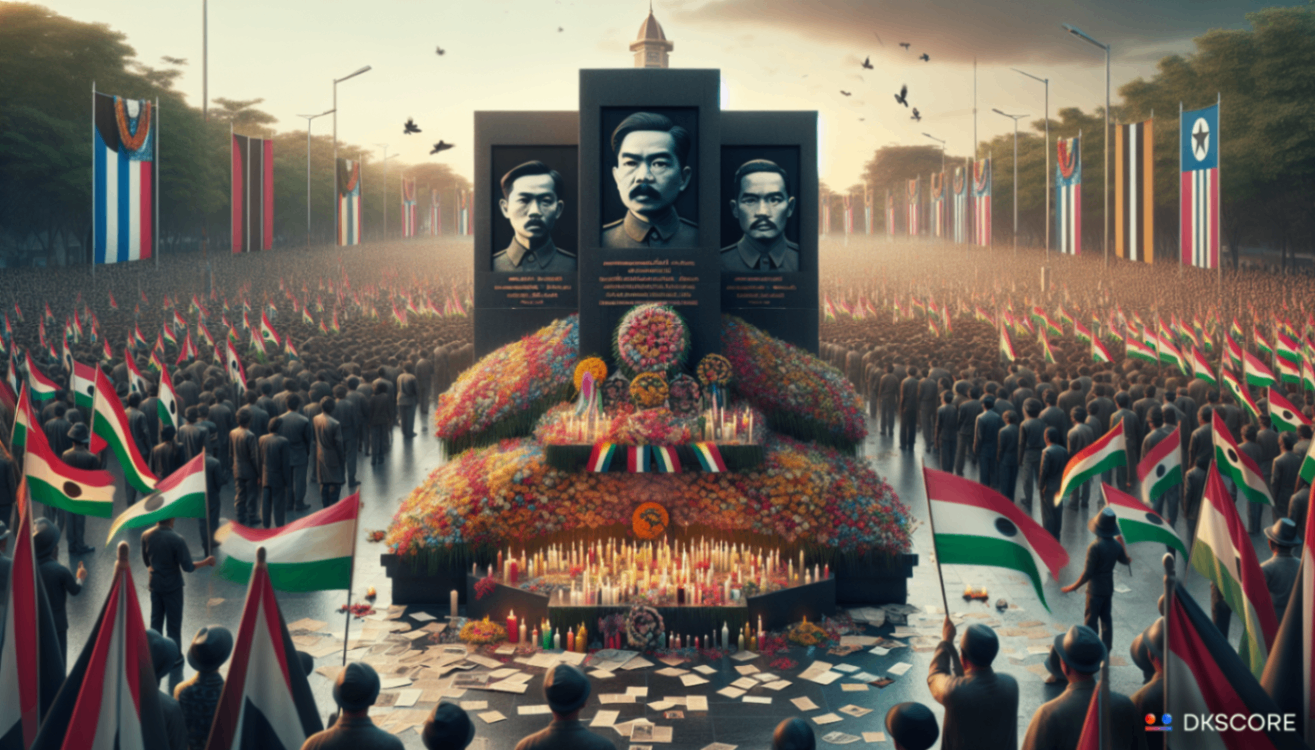
FESTIVAL_IMAGEPATHFESTIVAL_IMAGEPATH

Subhas Chandra Bose Jayanti 2026: Festival Details, Dates and Events

AI search -DKSCOREDKSCORE AIsearchaicircle
  • ICON Subhas Chandra Bose Jayanti 2026

    Subhas Chandra Bose Jayanti commemorates the birth anniversary of the prominent Indian nationalist leader Subhas Chandra Bose, fondly known as "Netaji." His leadership and efforts toward liberating India through the Indian National Army (INA) have left a profound impact on India's history. This day is marked by patriotic events, speeches, and programs to inspire future generations about his sacrifice and leadership.

    festival
    Subhas Chandra Bose Jayanti 2026
    religion
    Hinduism
    Date
    23-01-2026
    day
    Friday
    Muhurat time
    --
    Duration
    --
  • swastik Festival Date

    23 Jan, 2026

    Subhas Chandra Bose Jayanti

    calblue Today Date

    20 Jan, 2026

  • Subhas Chandra Bose Jayanti

    Time Remaining

Why we Celebrate Subhas Chandra Bose Jayanti ?

Subhas Chandra Bose Jayanti is observed to honor the birth of one of India’s greatest freedom fighters, whose contributions to India’s independence struggle were significant. There is no direct astrological significance, but it is celebrated on the 23rd of January annually, marking his birth.

Important Days

Meditation and Mantras

FESTIVAL_IMAGEPATH

Subhas Chandra Bose Jayanti 2026: Dates, Details & Events

Observed on the birthday of one of Indias most influential freedom fighters, Subhas Chandra Bose Jayanti is a time for reflection, education, and collective action. This article offers a comprehensive view of the festival in 2026, exploring its significance, the date and timing, mythological resonances, Vedic astrology perspectives, rituals, health and spiritual benefits, mantras, and how modern communities celebrate across India and the world.

Note: While Bose’s life is grounded in history, some sections discuss mythic and astrological interpretations as cultural context and storytelling traditions. These are not predictive claims but ways people engage with meaning and inspiration.

Understanding the Significance of festival Subhas Chandra Bose Jayanti 2026

Subhas Chandra Bose, commonly known as Netaji, is celebrated for his uncompromising pursuit of Indias freedom and his belief in active, self-reliant struggle. Bose stands as a figure who challenged the status quo with strategic thinking, bold leadership, and a willingness to make hard choices for India’s future. Jayanti—literally, the birthday commemoration—serves several interconnected purposes for a modern audience:

  • Historical remembrance: Honoring Bose’s role in shaping nationalist strategy, including his leadership of the Indian National Army (Azad Hind Fauj) and his efforts to mobilize international support for independence.
  • Educational focus: Providing a platform to study his writings, speeches, and philosophies about sovereignty, self-respect, and social justice.
  • Inspiration for civic engagement: Encouraging youth, students, and communities to participate in public service, education, and volunteer work.
  • Reflection on unity and resilience: Bose’s life invites contemplation about national unity, regional diversity, and the resilience required to overcome existential challenges.
  • Global cultural resonance: With diaspora communities around the world observing the day, Jayanti becomes a bridge between Indian history and global civic memory.

In 2026, the festival continues to be a catalyst for dialogue across generations. It is also a lens through which people examine the relationship between past struggles and present-day democratic values. Community leaders, educators, museums, and cultural organizations use this day to host seminars, film screenings, youth forums, and exhibitions that contextualize Bose’s mission within today’s social and political landscape.

For families and individuals, Jayanti is often a personal moment of gratitude for the freedoms many take for granted, paired with a call to participate in public life with integrity, courage, and compassion. The festival thus blends memory with active citizenship, turning history into practical, ongoing action.

Subhas Chandra Bose Jayanti 2026 Date and Timing

Subhas Chandra Bose Jayanti is observed annually on January 23, commemorating Bose’s birth date in 1897. For the year 2026, the festival follows the standard calendar, with a wave of events concentrated in the early morning hours in many locations and more expansive programs throughout the day. Here are practical details to help readers, organizers, and attendees plan effectively:

  • Official date: Monday, January 23, 2026. Local observances may begin a day or two earlier in some communities with lectures, archives exhibitions, or school programs that highlight Bose’s life.
  • Typical morning rituals: Dawn ceremonies at national memorials, school flag ceremonies, and tributes at Bose statues or portraits are common. These often begin around 5:30 AM to 7:00 AM in many cities.
  • Regional variations: In Kolkata, Mumbai, Delhi, and major state capitals, formal events include wreath laying, police and military honors, and public addresses by eminent speakers. In smaller towns, community centers, temples, and cultural halls host programs that emphasize Bose’s ideas and leadership.
  • Virtual and hybrid access: With a growing emphasis on digital access, many institutions stream talks, documentaries, and panel discussions. Look for official channels from national museums, universities, and government portals hosting live streams or recorded editions.
  • Timings and calendars: Always verify local schedules with district cultural departments, school bulletins, or museum events pages. Timetables can differ due to daylight hours, weather, and local traditions.

For readers planning to attend: consider arriving early to secure seating for popular events, carry comfortable footwear for long commemorations, and check if there are any security or entry restrictions. If you cannot attend in person, many events offer live-streams or recorded summaries so you can participate from home or work.

Mythological Stories Behind Subhas Chandra Bose Jayanti 2026

While Subhas Chandra Bose’s life is rooted in modern history, many communities weave mythological and legendary motifs into the festival to convey moral and spiritual lessons. These stories are symbolic narratives used in culture to capture the essence of Bose’s courage, self-sacrifice, and leadership. They help audiences connect deeply with the ideals Bose embodied. Here are representative themes and stories often shared during Jayanti observations:

  • Courage of the hero: In Indian epic tradition, heroes rise in moments of crisis. Bose is frequently presented as a modern parallel to mythic figures who confront injustice, endure long journeys, and improvise under pressure to secure freedom. The tale emphasizes inner strength, fearless decision-making, and a willingness to bear hardship for a larger good.
  • Duty to the nation as a sacred duty: Many stories frame governance and independence as a form of dharma (righteous duty). Bose’s unwavering devotion to India resonates with these narratives, where the hero’s duty to family, community, and the nation supersedes personal comfort.
  • Unity within diversity: Indian myths often highlight the strength found in unity among diverse peoples. Bose’s inclusive approach—mobilizing people across regions, languages, and beliefs—mirrors these mythic ideals about harmony and shared purpose.
  • Righteous leadership under pressure: The legends surrounding leaders who make tough choices—sometimes controversial—are used to discuss the difficult balance between means and ends. Jayanti storytelling may explore Bose’s strategic choices in pursuit of freedom and his insistence on dignity for every citizen.
  • Spiritual resolve and ethical compass: Some narratives link Bose’s spiritual curiosity with his steadfast sense of ethics. The idea that a strong will must be tempered by wisdom and integrity echoes in many mythic accounts of revered leaders.

Important caveats: these mythological connections are symbolic and cultural rather than historical claims about Bose. They serve as a way to communicate moral values, inspire youth, and place Bose’s life within a larger tradition of heroic storytelling. When presenting mythic parallels, communities often emphasize the ethical dimensions of Bose’s choices rather than engaging in speculative or supernatural claims.

Educators, storytellers, and cultural organizations can use myth-inspired narratives thoughtfully by pairing them with factual timelines, primary sources, and documentary footage. This approach helps audiences distinguish between historical facts and mythic symbolism while still drawing out timeless lessons about courage, service, and national pride.

Vedic Astrology and Subhas Chandra Bose Jayanti 2026

Vedic astrology, or Jyotisha, offers a framework many people use to reflect on auspicious times, personal strengths, and the energies of a given year. For Jayanti in 2026, readers may encounter several common ideas that some astrologers discuss when contemplating historical figures and commemorative days. This section presents a balanced overview that is suitable for general readers who wish to understand the cultural context without claiming definitive guarantees about prediction or fortune.

  • Auspicious timing and muhurats: In Jyotisha, an auspicious muhurat is often sought for important events. While Bose Jayanti is a fixed observance, communities sometimes select favorable times for ceremonies, wreath-laying, or public talks to maximize resonance and peace of mind among participants.
  • Planetary influences on leadership energy: Some astrologers relate leadership, vision, and public impact to strong planetary configurations—visible in the positions of the Sun, Saturn, Jupiter, and Mars in one’s birth chart or in current transits. For a national figure connected to public life, these themes may be discussed in general terms during commemorative programs.
  • Chandra (Moon) and intellect: The Moon’s positions are often linked to memory, emotion, and public sentiment. On Jayanti, some practitioners might refer to lunar transits to understand communal mood, collective memory, or the emotional resonance of Bose’s legacy.
  • Rashi (zodiac sign) and personal resonance: People born under certain signs may feel a special affinity with Bose’s values on that date. Community organizers sometimes invite astrologers to offer personal horoscopes or guidance for attendees, framed as optional and not prescriptive for decision-making.

It is important to emphasize that astrology should be read as a cultural tradition and an interpretive lens rather than a source of factual history. For festival planning, astrology can inform timing preferences, such as choosing serene, well-ventilated venues, or scheduling programs when traffic is lighter and the audience can participate with focus and calm. For those who enjoy Jyotisha, consult a reputable astrologer and consider diverse perspectives to avoid overgeneralization.

Subhas Chandra Bose Jayanti 2026: Astrological Insights

This section expands on the idea of astrology in a broader, non-predictive sense. Astrological insights are often used to create a sense of shared experience and to highlight values that communities want to emphasize—courage, resilience, and service. Here are several accessible points that readers can reflect on during Jayanti in 2026:

  • Energy of communal action: Observances of Bose Jayanti frequently emphasize civic participation and collective effort. Astrology discussions may frame this as a time when people feel drawn to contribute to social causes, volunteer work, and educational outreach.
  • Intellectual courage and strategic thinking: Bose’s leadership is associated with strategic planning and bold decision-making. Astrological conversations may highlight mental clarity, forward thinking, and the capacity to translate ideas into concrete action.
  • Temperance and ethical grounding: Ethical dimensions—how strategies align with long-term welfare and justice—can be a theme in astrological reflections. This helps communities examine not only what is possible, but what should be pursued with integrity.
  • Balance of emotion and reason: The festival’s emotional resonance—gratitude, pride, and remembrance—can be paired with reasoned inquiry, historical study, and respectful debate about Bose’s legacy and its relevance today.

For readers who enjoy a structured approach, consider a simple yearly practice: spend a few minutes in quiet reflection on Bose’s core values (courage, service, national unity), then pair that reflection with a practical commitment—learn something new about Bose’s era, engage in a service project, or share a documentary with peers. Astrology can accompany but should not replace critical study and informed discussion.

Rituals and Practices of Subhas Chandra Bose Jayanti 2026

Rituals on Jayanti blend tradition, education, and public memory. They are designed to honor Bose’s life while encouraging ongoing public service and civic engagement. The following practices are commonly observed and can be adapted to different contexts—schools, communities, homes, and workplaces:

  • Flag ceremonies and wreath-laying: A wreath at Bose’s portraits or at memorials, followed by a moment of silence and a short reading of Bose’s quotes or speeches, is a staple in many institutions.
  • Reading Bose’s writings and speeches: Participants read excerpts from Bose’s public addresses, letters, or later compilations of his thoughts on freedom, governance, and social justice. Schools and libraries often arrange reading corners or mini-seminars.
  • Screenings and discussions: Documentaries, archival footage, and dramatized portrayals of Bose’s work are shown. Post-screening discussions help connect historical events with present-day concerns about leadership, ethics, and national service.
  • Educational panels and lectures: Universities and cultural organizations hold lectures on Bose’s role in the independence movement, his international diplomacy, and the broader context of anti-colonial struggles in the 20th century.
  • Community service and volunteering: In the spirit of Bose’s emphasis on action, many communities organize blood donation drives, literacy campaigns, neighborhood cleanups, or skill-building workshops on Jayanti weekend.
  • Exhibitions and archival displays: Museums, libraries, and cultural centers host exhibitions highlighting Bose’s correspondence, photographs, and items from the Azad Hind movement, with explanations that place them in historical context.

Practical tips for organizers and participants:

  • Plan events with clear objectives: education, remembrance, and public service actions.
  • Ensure accessibility: provide sign language interpretation where possible, broadcast captions for videos, and arrange inclusive seating.
  • Promote diverse voices: invite historians, educators, students, and veterans to share perspectives on Bose’s legacy.
  • Foster intergenerational dialogue: design activities that engage both older admirers and younger learners, bridging experiences across generations.

Through these rituals, Bose’s memory becomes a living practice—an invitation to learn, reflect, and contribute to society. The rituals are not mere commemorations but a call to align personal actions with a broader moral purpose: service to the nation, education for all, and the pursuit of social justice with courage and integrity.

Health and Spiritual Benefits of Subhas Chandra Bose Jayanti Rituals

Engaging with commemorative rituals can have positive effects on mental well-being, social connectedness, and a sense of purpose. While these outcomes are not medical claims, many participants report measurable benefits closely tied to the practice of mindful remembrance, community involvement, and purposeful action. Key benefits commonly observed include:

  • Sense of belonging: Shared rituals foster social bonds and a sense of community identity. Participating in a collective remembrance reduces loneliness and strengthens social networks.
  • Meaning-making and resilience: Reflecting on Bose’s life—his perseverance, strategic thinking, and sacrifice—helps individuals reframing personal challenges in a larger, meaningful narrative.
  • Mindfulness and calm: Quiet moments of contemplation, prayers, or mantras can promote relaxation, reduce stress, and enhance focus during the day’s events.
  • Inspiration to serve others: Service-oriented activities during Jayanti provide a sense of purpose and can boost mood and motivation through altruistic behavior.
  • Educational engagement: For students and lifelong learners, exposure to historical materials and discussions enhances cognitive engagement and critical thinking.

To maximize these benefits, consider incorporating intentional practices into the day: a short group meditation or breathing exercise, a concise reflection on Bose’s values, and a call to action that closes the event with a practical step—volunteering, donating to a cause, or participating in a community project.

Mantra Chanting During Subhas Chandra Bose Jayanti 2026

Mantra chanting is a common ritual in many Indian commemorations. On Bose Jayanti, communities may incorporate chanting and recitation to foster focus, devotion, and collective energy. It is important to note that Bose himself did not prescribe a particular religious mantra for the festival. Instead, audiences often draw on broader spiritual and patriotic expressions that align with the day’s themes of courage, truth, and service. Suggested practices include:

  • Patriotic phrases: Short, memorable chants such as “Jai Hind” can be recited together to foster unity and shared purpose. This phrase, popularized by Bose and widely used in India, serves as a unifying refrain rather than a formal ritual text.
  • Inspiring mantras for courage and resilience: Neutral, non-sectarian mantras that emphasize strength, clarity, and steadfastness can be used in a secular context. Examples include universal invocations for courage, peace, and integrity.
  • Chanting during moments of silence or reflection: A quiet period with a soft repetition of a calming mantra or a short vow can help participants center themselves before or after speeches and readings.
  • Guided breathing and visualization: A brief breathing exercise paired with a positive visualization—e.g., envisioning people coming together to serve a common cause—can enhance focus and collective energy without religious overtones.

Implementation tips for organizers:

  • Clarify the tone: make it clear whether the session is formal, religious, or secular so participants know what to expect.
  • Provide participation options: those who prefer not to chant can observe, listen, or join in with quiet reflection.
  • Keep it brief: align chants with the event’s schedule to maintain momentum and accessibility.

Ultimately, mantra practices on Jayanti should enhance inclusivity, focus, and shared purpose. They should respect diverse beliefs while providing a meaningful experience for all attendees.

Subhas Chandra Bose Jayanti 2026 in Modern Times

The way Bose Jayanti is observed has evolved with technology, education, and global connectivity. Here is a snapshot of how the festival is celebrated in modern times and what readers can expect in 2026:

  • Digital campaigns and social media: Government portals, cultural organizations, and student groups use official hashtags, share archival footage, and publish short, informative videos about Bose’s life and philosophy. These digital campaigns extend the reach of Jayanti beyond geographic boundaries, allowing the diaspora to engage in real time.
  • Interactive educational programs: Schools and universities host virtual lectures, webinars, and panel discussions featuring historians, veterans, and experts in political science. Interactive quizzes and micro-learning modules help young people learn about Bose’s contributions in an accessible way.
  • Museums and archives: National museums and specialized archives display Bose-related artifacts, oral histories, and digital archives. Interactive kiosks and augmented reality installations offer immersive ways to explore his life and era.
  • Community service and social impact: The theme of service translates into practical actions such as blood donation drives, literacy campaigns, health awareness programs, and environmental stewardship in honor of Bose’s dedication to national well-being.
  • Global diaspora participation: Communities around the world organize commemorations, cultural performances, and exhibitions, connecting Bose’s legacy with local histories and social issues in host countries.

For individuals, the modern festival provides multiple pathways to participate—attend a local event, organize a small discussion circle, watch a documentary with friends, or contribute to a community project. The combination of memory, education, and action defines contemporary Bose Jayanti as both a reflection on the past and a catalyst for constructive civic life.

For organizers seeking practical ideas in 2026, consider:

  • Partnering with schools and universities to host student-led research presentations on Bose’s life and the Azad Hind movement.
  • Hosting documentary screenings followed by moderated discussions on leadership ethics and constitutional values.
  • Creating classroom activities that connect Bose’s ideals with current social issues such as youth empowerment, women’s education, and public health.
  • Launching community service campaigns during and after Jayanti to sustain the festival’s spirit of action.

Conclusion

Subhas Chandra Bose Jayanti 2026 stands as a living testament to a complex and transformative moment in Indian history. It invites audiences to remember a public figure whose actions and ideas continue to spark discussion about leadership, courage, unity, and service. The festival blends historical study with contemporary practice—educational programs, cultural events, and community service—so that Bose’s legacy remains relevant for new generations. In today’s world, Jayanti offers a meaningful opportunity to reflect on what it means to face challenges with determination, to pursue freedom with responsibility, and to contribute to the common good with both passion and prudence.

As you participate in Bose Jayanti 2026, consider a few practical takeaways:

  • Learn something new about Bose’s life and the independence movement—read biographies, speeches, or archival material.
  • Engage with others in constructive dialogue about leadership, ethics, and national service.
  • Choose a service-oriented action that you can commit to in the weeks following Jayanti—whether it’s volunteering, mentoring, or supporting an education-related cause.
  • Share thoughtful and accurate information online to contribute to informed remembrance in the digital age.

In sum, Subhas Chandra Bose Jayanti 2026 is more than a date on a calendar. It is a call to learn, to reflect, and to act in ways that honor Bose’s memory and advance the values he championed: courage, self-reliance, unity, and service to the nation. By combining scholarly inquiry, respectful storytelling, and practical action, communities can transform remembrance into ongoing impact that benefits individuals and society as a whole.

Charity and Donations

Joy Stories Foundations

Joy Story Foundation is a section-8, non-profit organization founded in November 2019, registered with Ministry of Corporate Affairs, Government of India. It aspires to build stories around “Joy for Everyone” by practicing the values of collective philanthropy and by maintaining utmost transparency in order to achieve it. Our vision is to ensure that we do our bit to free the world of gloom, sorrow, deprivation, pessimism, and pain by inducing small positive moments to bring joy in the world. And we would go to any extent to achieve that, irrespective of geographical boundaries, religion, age, color or need. Our giving would be completely unbiased, non- religious and non-political.

Have doubts and need help?

Check out our Frequently Asked Questions to find the answers. But hey, if your doubts still persist, we are only a demo call away!

Frequently Asked Questions

What are the do's and don'ts for Subhas Chandra Bose Jayanti 2026 celebrations?

Do's: Attend official or publicly approved events at designated venues; arrive early and follow crowd management, security and venue rules; respect memorials, national symbols and the dignity of the occasion; dress modestly and behave with decorum; keep the venue clean and dispose of waste responsibly; seek permission for photographs or videography where required; share accurate information about Subhas Chandra Bose and his legacy; follow local guidelines and any health-related protocols. Don'ts: do not disrupt ceremonies or engage in political campaigning on government property; do not carry prohibited items (weapons, alcohol, fireworks where banned); do not litter, vandalize or damage public property; do not spread misinformation or rumors about the event or figures; do not invade privacy or harass participants; do not ignore security instructions or venue rules; do not engage in hate speech, violence, or harassment.