


 Home
Homeking faroukh Horoscope
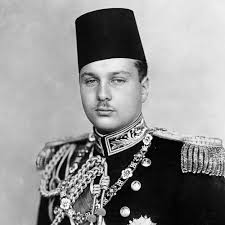
king faroukh Horoscope & Birth Chart
Feb 11, 1920 Married
Rating : AA (Data from a birth certificate)

Libra
Moon Sign

Capricorn
Sun Sign

Virgo
Lagan
 Latest Info with AI
Update at: Mar 12, 2026
King Farouk I (Faroukh) – Public Profile
Name: Farouk bin Fuad (often rendered “King Faroukh” in English transliteration)
Born: Wed Feb 11, 1920, Cairo, Egypt
Died: March 18, 1965, Rome, Italy
Reign: 1936–1952 (last monarch of the Muhammad Ali dynasty)
Summary
King Farouk I ascended the throne as a teenager and ruled Egypt and Sudan during a turbulent era marked by World War II, the widening struggle over British influence, and the 1948 Arab–Israeli War. His reign ended with the 1952 Free Officers Revolution, after which he abdicated in favor of his infant son (Fuad II) and went into exile. Famous for his royal collections and lavish lifestyle, he remains a polarizing figure—criticized for excess and corruption, yet remembered for royal patronage, cosmopolitan court culture, and an enduring imprint on Egyptian popular memory.
Recent news and media coverage
- Historic coin sale (2021): The 1933 Double Eagle US gold coin, long associated with the “King Farouk collection,” sold at auction for a record sum, renewing global interest in Farouk’s legendary holdings and their provenance.
- Centenary retrospectives (2020): On the 100th anniversary of his birth, international and Egyptian media published profiles, photo essays, and reassessments of his rule, personal life, and the lead‑up to the 1952 Revolution.
- Auctions and collectibles: Major houses (e.g., Christie’s, Sotheby’s, Bonhams) continue to feature Farouk‑provenance items—timepieces, medals, photographs, and correspondence—drawing collectors and historians.
- Museum visibility: Egyptian museums with royal-era holdings—such as the Abdeen Palace Museums in Cairo and the Royal Jewelry Museum in Alexandria—periodically refresh displays that include Farouk‑period artifacts.
Social media presence
- Official accounts: None for the late monarch; activity is largely archival or fan‑run.
- Fan and history pages: Numerous Arabic- and English‑language pages on Facebook, Instagram, X, and YouTube share photos, anecdotes, and clips from newsreels.
- Common hashtags: #KingFarouk, #FaroukI, #Faroukh, and Arabic tags such as #الملك_فاروق and #فاروق_الأول.
- Archival video: Channels like British Pathé and AP Archive host period footage of royal ceremonies, public appearances, and coverage of the 1952 abdication.
Recent projects and ongoing research
- Archival digitization: Continued online release of newsreels, photographs, and documents by international archives and Egyptian institutions supports fresh scholarly work on the late monarchy.
- Museum conservation: Ongoing conservation and interpretation at historic royal residences (e.g., Abdeen Palace; Manial Palace Museum) provide context on court life and Farouk‑era material culture.
- Scholarship and media: Biographies, podcasts, and academic articles regularly revisit Farouk’s political choices, his collections, and the monarchy’s final years.
Notable works and collectibles
- Royal collections: Farouk’s renowned assemblages of coins, stamps, watches, and objets d’art are frequently cited in numismatic and horological literature; items with documented Farouk provenance are highly prized.
- Screen portrayals: The 2007 Arabic TV drama “King Farouk” reintroduced his story to new audiences and remains popular on streaming and video platforms.
Background and family
- Parents: King Fuad I and Queen Nazli Sabri
- Spouses: Queen Farida (Safinaz Zulficar); later Queen Narriman Sadek
- Children: Princesses Ferial, Fawzia, Fadia; and Fuad II (last King of Egypt, as a child)
Research tips
- Search in both English and Arabic name variants to surface global and regional sources.
- Consult museum catalogs, auction listings with provenance notes, and digitized newsreels for primary material.
- Cross‑check anecdotes shared on social media with reputable histories to avoid myths and apocrypha.
 Related Articles
 AI Generated king faroukh horoscope analysis


Ascendant
26
Virgo

Sun
29
Capricorn

Moon
28
Libra

Mercury
3
 Aquarius

Jupiter
19
 Cancer

Rahu
27
Libra

Venus
23
 Sagittarius

Ketu
27
 Aries
Aries


1st
Ascendant Represent AS
The Ascendant (Lagna) in Vedic astrology represents the self, physical body, personality, and how we interact with the world. It defines our core identity, health, and the first impression we make on others. The sign rising on the eastern horizon at the moment of birth becomes the Ascendant, influencing our temperament and approach to life. Its ruler significantly shapes how we express ourselves a...Read More
king faroukh birth chart analysis by DKSCORE Ai for Ascendant
In Vedic astrology, the natal lagna (ascendant) significantly influences an individual’s personality, physical appearance, and overall life journey. When the natal lagna is in Virgo, the person is typically analytical, detail-oriented, and methodical. Virgo is ruled by Mercury, which endows the individual with strong intellectual capabilities, a critical mind, and a preference for order and efficiency. Virgo ascendants in Chitra nakshatra, specifically, are known for their creativity and aesthetic sense. Chitra nakshatra is symbolized by a shining jewel or a bright light, indicating a person who seeks to shine brightly in their pursuits, often displaying a flair for the arts, design, or craftsmanship. This placement suggests an individual who is meticulous yet artistic, combining practicality with creativity. Now, considering Mercury, the ruling planet of Virgo, is placed in the 6th house in Aquarius and in Dhanishta nakshatra, this placement adds more layers to the interpretation. The 6th house generally represents service, health, daily work, and conflicts. When Mercury is in the 6th house, it indicates a person who is likely to excel in professions that require analytical skills, problem-solving abilities, and a meticulous approach. They may be drawn to careers in healthcare, law, or any field that involves detailed analysis and service. Aquarius, ruled by Saturn and co-ruled by Rahu, imparts a progressive and unconventional mindset. With Mercury in Aquarius, the person’s thinking is innovative, forward-looking, and often ahead of their time. They may have unique ideas and a strong inclination toward humanitarian efforts or technological advancements. Dhanishta nakshatra, symbolized by a drum, indicates rhythm, prosperity, and adaptability. This nakshatra is ruled by Mars, which adds a dynamic and energetic quality to Mercury’s placement. Therefore, individuals with Mercury in Dhanishta nakshatra are likely to be ambitious, disciplined, and capable of working persistently toward their goals. In summary, a Virgo ascendant in Chitra nakshatra with Mercury in the 6th house in Aquarius and Dhanishta nakshatra indicates an individual who is analytical, creative, and meticulous, with a strong inclination toward service-oriented professions. They possess a unique, innovative mindset and are likely to excel in fields requiring detailed analysis and problem-solving skills, driven by a disciplined and ambitious nature.

Related Profiles
see all


Simple tool that freedom your work way
Experience the freedom of a simpler, more intuitive workflow with our advanced astrologer app. Learn astrology effortlessly with our user-friendly tools.


Join DKSCORE for free
- Join as an astrologer


 Download App