


 Hindu Festivals & Auspicious Muhurats 2026
India celebrates thousands of festivals including Hindu, Sikh, Jain, Buddhist, Muslim, Christian, and regional traditions. This festival hub gives users dates, lunar tithis, ritual significance, and regional observances for every major celebration. All festival dates are updated according to the Hindu Panchang, lunar calendar, and official announcements.

 DKSCORE AI
Religion Wise Festival (2026)
Top Festivals

Lohri 2026
A harvest festival celebrated primarily in Punjab
January 13, 2026, Tuesday
Makar Sankranti 2026
Marks the transition of the Sun into the zodiac sign of Capricorn (Makara
January 14, 2026, Wednesday
Pongal 2026
Harvest festival celebrated over four days in Tamil Nadu
January 14, 2026, Wednesday
Holi 2026
One of the largest festivals in the world, Holi (HO-lee) celebrates the start of spring, which is th… Read more
March 04, 2026, Wednesday
Chaitra Navratri 2026
A nine-day festival dedicated to Goddess Durga
March 19, 2026, Thursday
Ram Navami 2026
Celebrates the birth of Lord Rama
March 27, 2026, Friday
Mahavir Jayanti 2026
Celebrates the birth of Lord Mahavira, the 24th Tirthankara of Jainism
March 31, 2026, Tuesday
Hanuman Jayanti 2026
Celebrates the birth of Lord Hanuman
April 02, 2026, Thursday
Buddha Purnima 2026
Celebrates the birth, enlightenment, and death of Gautama Buddha
May 01, 2026, FridayHanuman Jayanti 2026 Telugu
Celebrates the birth of Lord Hanuman
May 12, 2026, Tuesday












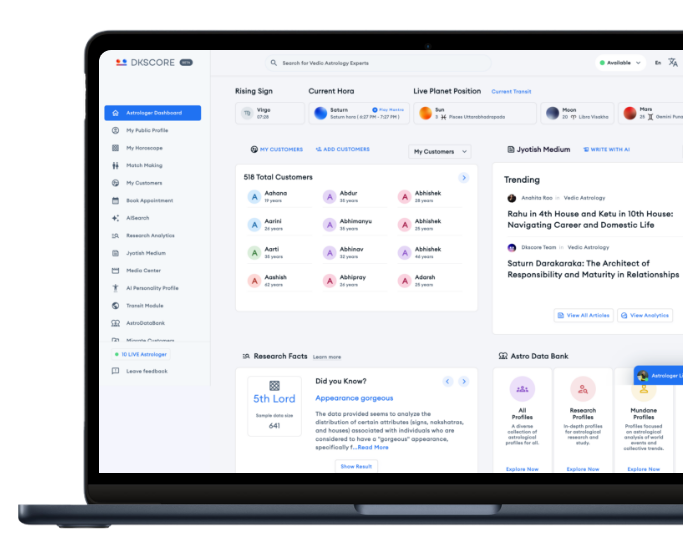
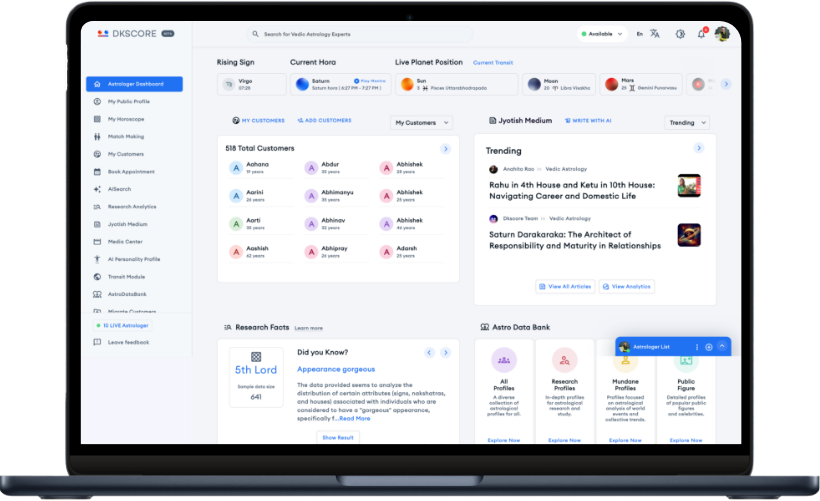
Attract, Engage, and Grow with DKSCORE
Effortlessly reach the right audience, build lasting connections, and scale your astrology business with AI-driven marketing automation
Join as an astrologer
Advanced CRM to Manage Your Customers
We effectively capture leads at different stages and prioritize next steps based on their intent to do more.

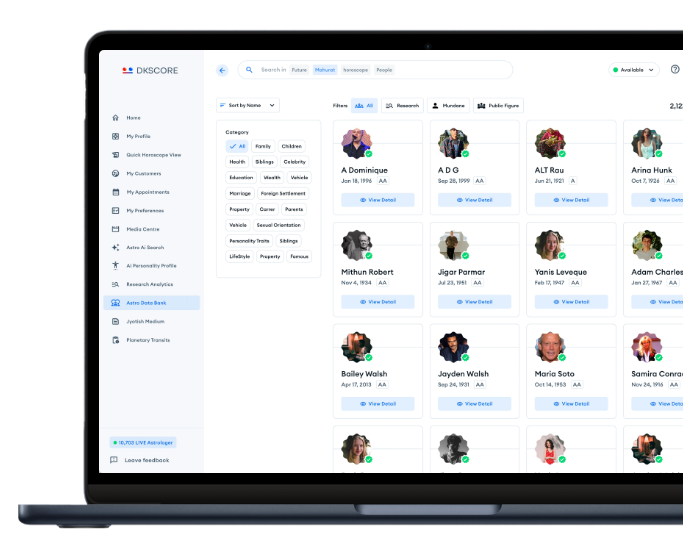
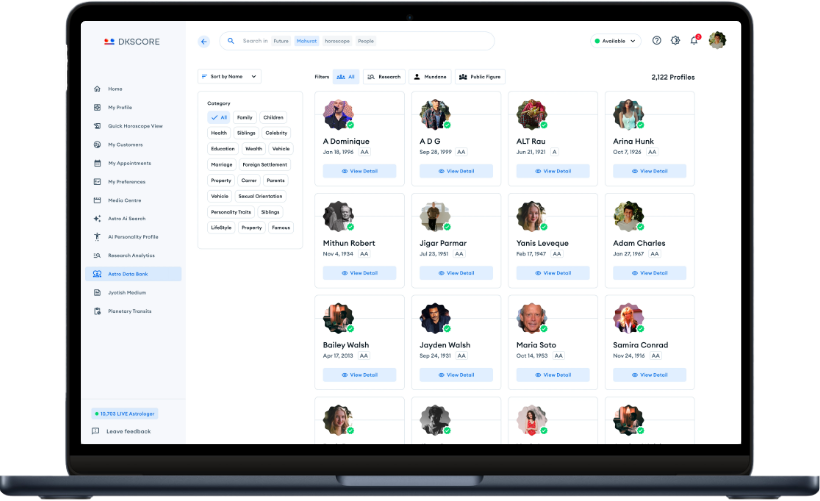
Astrological Profile Filtering for Precision
Empower astrologers worldwide with comprehensive knowledge resources for improved service.

Customer segmentation
Empower astrologers worldwide with comprehensive knowledge resources for improved service.

Automated Promotions & Client Engagement
You can create exciting offers for your target audience on the go. Everything from early bird offers to flash discounts.






Lunar Wise Festival (2026)
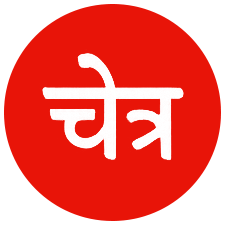 Chaitra
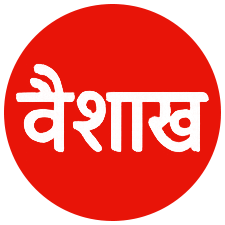 Vaishakha
 Jyaistha
 Ashadha
 Shravana
 Bhadrapada
 Ashwin
 Kartika
 Margashirsha
 Pausha
 Magha
Magha Phalguna
Related Articles







Frequently Asked Questions
You can filter festivals by religion directly on the Festivals page. Select Hindu, Sikh, Jain, Buddhist, Christian, Muslim, Tamil or other categories to view festivals specific to that tradition
Yes. DKSCORE updates festival dates annually. Since most Indian festivals follow the lunar calendar, dates change each year and we ensure the latest, accurate information is published
The Hindu lunar calendar is based on moon phases, so dates differ from the standard Gregorian calendar. DKSCORE provides both the lunar date and its corresponding English calendar date for every festival.
Yes. Each festival page includes an “Add to Calendar” option that lets you sync the festival date with Google Calendar, Apple Calendar, or Outlook.
Absolutely. Each festival page includes historical background, cultural significance, rituals, and traditional ways of celebration.
Hindu festival dates are calculated using tithis, nakshatras, and lunar phases. Our team references panchangams, expert inputs, and official sources to determine accurate dates each year
Yes. DKSCORE lists major Indian festivals as well as regional celebrations observed across states and communities. You can request additions if a festival is missing.
Yes. You can search festivals by date, month, or name using the search bar or the interactive calendar view available on the Festivals page.
We verify dates using trusted panchangams, astrologers, and official calendars. While dates are highly accurate, local observances may vary slightly by region.
Yes. The calendar includes major international observances like Christmas, Easter, New Year, Eid, and globally recognised UN days celebrated in India.
The next upcoming festival is shown at the top of the Festivals page, based on today’s date and your selected region or religion.
Yes. The Festival section highlights today’s festival, tithi, and important observances using accurate daily panchang data.
Yes. You can view festivals for any year, including 2024, 2025, and 2026, using the year filter or by browsing our yearly festival calendars.
English New Year 2026 is a cultural festival celebrating the start of the new year in English tradition. It typically takes place on New Year’s Eve (31 December) and continues into New Year’s Day (1 January) 2026, with public events, concerts, fireworks, street performances, and family activities across England. Local organizers may publish official schedules with participating cities and venues. Attendance ranges from free public gatherings to ticketed performances, so check the official festival website for exact times, locations, and safety guidelines.
English New Year 2026 falls on January 1, 2026. Common celebrations include New Year's Eve parties on December 31 with a midnight toast, public fireworks displays in cities, singing 'Auld Lang Syne,' and gatherings with family or friends on New Year's Day, sometimes followed by making New Year's resolutions.
In England, New Year celebrations are centered around New Year’s Eve (31 December) and New Year’s Day (1 January). People typically celebrate with gatherings at home, in pubs or clubs, or at public events. Highlights often include a late-night countdown to midnight, sparkling drinks, and toasts to the coming year. Many cities host public fireworks displays around midnight, with London’s event being the best known and usually accompanied by live music and a televised countdown. Some people attend street parties or family meals, while others enjoy quieter evenings at home. On New Year’s Day, it’s common to recover from the night before, take walks, watch football matches, or attend local parades or community events. Traditions also include making New Year’s resolutions for the year ahead. Details vary by location and year, so checking local event listings for 2025 is helpful.
Chandra Darshan is a lunar festival that centers on viewing the Moon (Chandra) and offering reverence to it. Chandra Darshan Jan 2025 refers to the edition of this celebration observed in January 2025. The exact date is determined by the lunar calendar and moon sighting, so regions may celebrate on different days. Common ways people observe it include visiting temples or designated moon-viewing spots with family, performing prayers to the Moon, singing or reciting mantras, preparing and sharing prasad, lighting lamps, and decorating homes. Some households observe a light fast or a simple vegetarian meal as part of the observance. Community events may feature storytelling about myths related to Chandra and cultural programs. To confirm the precise date for January 2025 in your area, check local temple calendars, regional Hindu almanacs (panchang), or official festival announcements. If you are traveling for the occasion, plan ahead and stay mindful of safety and weather conditions. This festival is celebrated in many parts of the Hindu and cultural communities with regionally varying rituals and timings.
Guru Pradosh Vrat is observed on Pradosh, the thirteenth lunar day, to honor Guru (Jupiter) and the guru-shishya tradition that blessings of wisdom and good fortune come through a guiding teacher. Regional legends speak of sages seeking Jupiter’s grace and the Shiva-Parvati Pradosh rite during twilight as sources of knowledge and prosperity. The practice is part of Navagraha and Shaiva-Vaishnava ritual calendars, highlighting the link between learning, planetary influence, and devotion.
Fasting till Pradosh is observed, then offer panchamrit, yellow flowers, sesame, jaggery, and a coconut to Brihaspati, and chant the Guru mantra (Om Guruve Namah) or Brihaspati Stotra.
In 2026, the vrat is observed on the Pradosh tithi after sunset, but regional Panchangs may shift it to the next day if the tithi ends late, and the nakshatra and muhurat windows can vary by locality.

 Download App